 Arcora Wasserhahn

Are Centerset Bathroom Faucet Cross Handles a Smart Choice for Your Sink in 2026?
Ansichten:1 EinstufungProduct
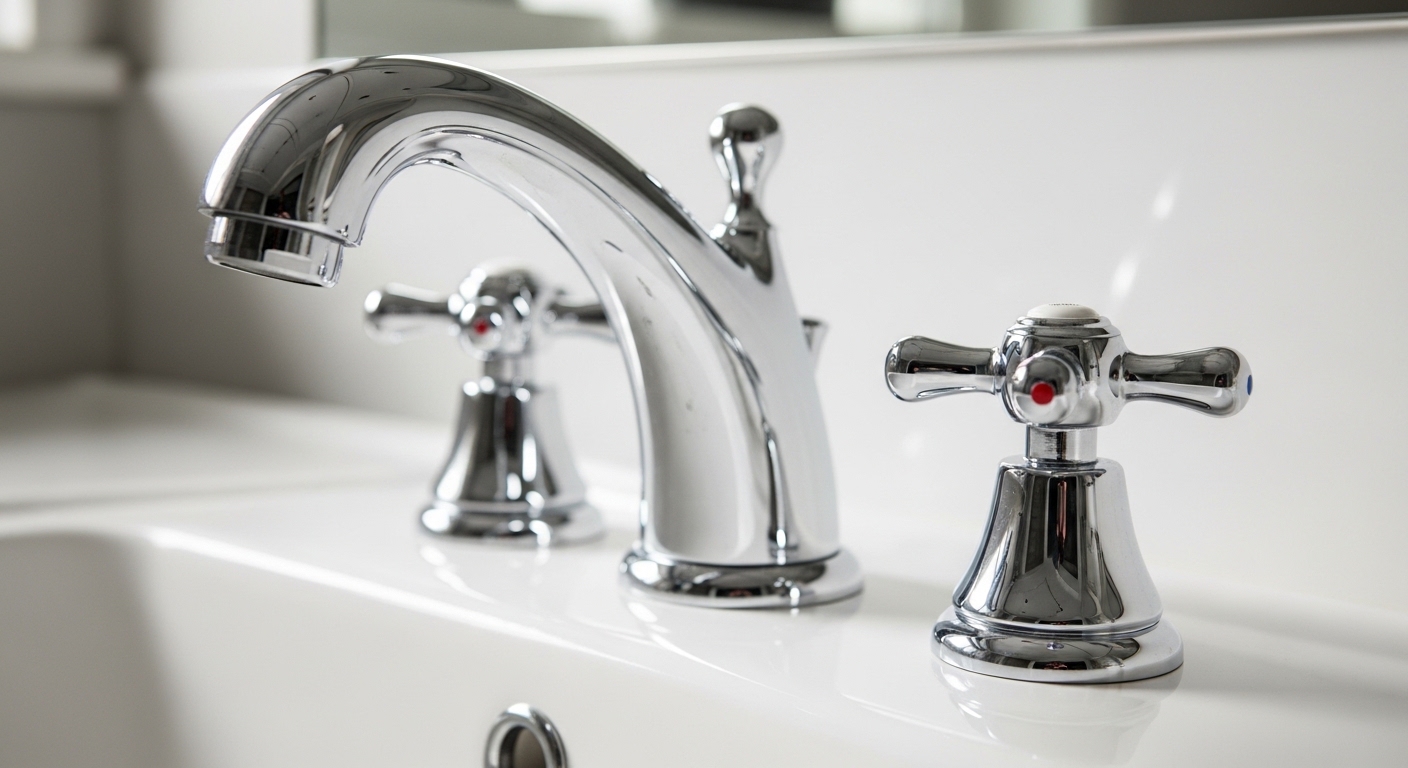
If you’re shopping for a centerset bathroom faucet cross handles setup, you’ve probably already noticed your sink has three holes spaced 4 inches apart and you want something that looks more refined than a plain lever. That’s exactly the scenario this faucet style was made for. Below, I’ll walk you through who it’s right for, how it compares to widespread and single-hole faucets, what the cross handles actually do for daily use, and how to pick a finish and valve that won’t disappoint you two years from now.
I’ve specced and installed bathroom fixtures for residential remodels for over a decade, and centerset cross-handle faucets are the one style I keep recommending to homeowners who want a „looks expensive, installs easy“ result. Let’s get into the real questions people ask.
What exactly is a centerset bathroom faucet with cross handles?
A centerset bathroom faucet with cross handles is a two-handle faucet where the spout and both handles sit on one connected base (or „escutcheon“) that fits a standard 4-inch three-hole sink, and the handles are shaped like a four-spoke cross or „plus“ sign that you turn rather than lift. The „centerset“ part refers to the 4-inch spread; the „cross handle“ part refers to the handle shape.
Three things make this style distinct:
- 4-inch center-to-center spacing. The distance between the two outer mounting holes is 4 inches. This is the most common residential bathroom sink drilling in North America, which is why centerset faucets are so easy to find and fit.
- One unified deck plate. Unlike a widespread faucet (three separate pieces), a centerset combines everything on a single body, so installation is faster and there’s less to align.
- Cross (or „lever-cross“) handles. These quarter-turn or multi-turn handles give you fine, tactile control and a vintage, transitional, or Victorian aesthetic — they pair beautifully with shaker vanities, pedestal sinks, and clawfoot-era bathrooms.
The practical upside: you get the upscale, two-handle „hot and cold“ look without the harder installation and wider hole spacing a widespread faucet demands. If you’re weighing the two styles head to head, our deep dive on widespread vs. centerset faucets and their main pros and cons breaks down the spacing and plumbing differences in detail.
Will a centerset cross-handle faucet fit my sink?
It will fit if your sink or vanity top has three holes drilled 4 inches apart, which covers the large majority of standard bathroom sinks. Measure from the center of the left hole to the center of the right hole — if that’s roughly 4 inches, a centerset faucet is your match.
Here’s how to check in under a minute:
- Count your holes. You need three: two for the handles, one center for the spout.
- Measure center-to-center on the outer holes. 4 inches = centerset. 6 to 16 inches = widespread (separate pieces). A single hole = single-hole faucet territory.
- Check the deck depth. Make sure there’s enough flat space behind the holes for the escutcheon plate to seat flush.
If your sink has a single hole, a centerset won’t drop in — but many centerset faucets ship with a base plate that can cover an 8-inch three-hole configuration in a pinch, though it’s not the cleanest look. If you’ve got an 8-inch spread and want that more luxurious split look, a widespread setup like the ones in our matte black widespread faucet guide is the better path.
Centerset vs. widespread vs. single-hole: which should I actually buy?
Buy centerset if you have a 4-inch sink and want the easiest install with a two-handle look; buy widespread if you have an 8-inch spread and want a high-end, customizable layout; buy single-hole if you want the most modern, minimal look and easiest cleaning. Here’s the honest comparison:
| Feature | Centerset (cross handles) | Widespread | Single-hole |
|---|---|---|---|
| Hole spacing | 4 in (3 holes) | 6–16 in (3 holes) | 1 hole |
| Install difficulty | Easy (one unit) | Moderate (3 pieces) | Easiest |
| Temperature control | Two handles, precise | Two handles, precise | One lever, quick |
| Style vibe | Classic / transitional | Upscale / custom | Modern / minimal |
| Typical price | $60–$180 | $120–$400+ | $50–$200 |
| Cleaning around base | Easy (one plate) | More crevices | Easiest |
For most homeowners with a standard sink, the centerset cross-handle faucet is the sweet spot: it costs less than a widespread, installs in about half the time, and the cross handles deliver that „designer“ first impression that a single-lever simply can’t. You only really need a widespread if your sink is already drilled at 8 inches or you specifically want the components spread apart.
Why pick cross handles instead of levers or knobs?
Cross handles win on three things: grip, precision, and timeless style. Their four-spoke shape gives you leverage from any angle, so they’re easier to turn with wet, soapy, or arthritic hands than a smooth round knob — and they let you dial in water temperature far more precisely than a single lever.
A few real-world advantages I point out to clients:
- Better wet grip. The spokes give your fingers something to catch, which matters in a bathroom where hands are constantly wet and slippery.
- Fine temperature tuning. Two independent handles mean you can nudge hot and cold separately — great for shaving, contact lenses, or anyone who likes water at an exact temperature.
- Design longevity. Cross handles read as classic, not trendy. They’ll look right in 2026 and still look right in 2040, which protects your resale appeal.
- Repair-friendly. Two-handle faucets typically use simple, replaceable cartridges or ceramic stems per side, so a drip on the hot side doesn’t mean replacing the whole faucet.
The one trade-off: two handles take two hands (or two motions) to shut off versus a single lever’s quick flick. For most bathrooms that’s a non-issue — you’re not in the rush you’d be in at a kitchen sink.
What finish holds up best, especially with hard water?
For hard water, brushed nickel and matte black hide water spots and mineral scale far better than polished chrome, which shows every droplet. If your home has hard water, choose a brushed or matte finish; if you have soft water or don’t mind quick wipe-downs, polished chrome and chrome cross handles look stunning and cost less.
Here’s how the common finishes behave day to day:
| Finish | Hides water spots? | Best for | Care level |
|---|---|---|---|
| Polished chrome | No — shows everything | Soft water, bright classic look | Frequent wiping |
| Brushed nickel | Yes — great | Hard water, warm neutral tone | Low |
| Matte black | Mostly — hides scale | Modern-classic contrast | Low–moderate |
| Brushed gold / brass | Yes | Warm, luxury statement | Low |
| Oil-rubbed bronze | Yes | Vintage / farmhouse | Low |
Finish isn’t just looks — it’s about how much cleaning you’ll sign up for. If you’re on well water or in a hard-water region, our guide to choosing the best faucet finish for hard water is worth a read before you commit. And if you’re matching a brushed nickel theme across your whole vanity, the ultimate guide to 3-hole brushed nickel bathroom fixtures covers coordinating handles, drains, and accessories.
How much should I spend, and what do I get at each price?
Expect to pay $60–$180 for a quality centerset cross-handle faucet. Under $60 you risk plastic internals and thin plating; above $180 you’re mostly paying for premium finishes (brushed gold, living finishes) and brand name rather than better function.
What the price tiers actually buy you:
- $60–$90 — solid everyday. Brass or zinc body, ceramic disc cartridges, standard chrome or brushed nickel. Perfectly good for a guest bath or rental.
- $90–$140 — the value sweet spot. Full brass construction, smoother ceramic cartridges, better finish durability (PVD plating), and a wider finish selection. This is where I tell most homeowners to shop.
- $140–$180+ — premium. Designer finishes, heavier solid-brass handles, longer warranties, and brand cachet. Worth it for a primary bath you’ll use daily for years.
The single most important spec at any price is the cartridge. Look for ceramic disc cartridges rather than rubber-washer compression valves — ceramic discs last far longer, resist hard-water wear, and are the reason a good faucet won’t drip after a year.
How hard is it to install a centerset cross-handle faucet myself?
It’s a genuine DIY job for most people — plan on 30 to 60 minutes with basic tools. Because everything is on one base, you’re aligning a single unit instead of three separate pieces, which is the main reason centerset faucets are friendlier than widespread for first-timers.
The basic sequence:
- Shut off the hot and cold supply valves under the sink and open the old faucet to release pressure.
- Disconnect the supply lines and remove the old faucet’s mounting nuts.
- Set the new faucet’s gasket or a bead of plumber’s putty under the deck plate, then drop the faucet into the three holes.
- Tighten the mounting hardware from below, hand-tight then a quarter-turn with a basin wrench.
- Connect new braided supply lines to the hot and cold inlets, turn the water back on, and check for leaks.
If your water barely trickles after installation, the culprit is almost always the aerator or a kinked supply line, not the faucet — our walkthrough on fixing faucet low water pressure covers the quick fixes before you panic. One tip: replace the flexible supply lines while you’re under there. They’re cheap, and old lines are a common hidden leak source.
What goes wrong over time, and how do I avoid it?
The two most common long-term issues are dripping handles (worn cartridges) and finish damage from harsh cleaners. Both are largely preventable: buy ceramic-disc cartridges up front, and clean with mild soap and water rather than abrasive or acidic products.
A quick maintenance checklist that keeps a cross-handle faucet looking and working like new:
- Wipe after use in hard-water homes to stop mineral scale building around the spokes of the cross handles.
- Avoid vinegar soaks on plated finishes — acid can dull or pit the plating over time. If your finish does get damaged, here’s how to handle a damaged faucet surface.
- Re-seat or replace cartridges at the first drip rather than cranking the handles harder, which just wears the seals faster.
- Check the aerator twice a year — unscrew, rinse out grit, and your flow stays strong.
Author note & brand credibility
This guide was written by the arcorawasserhahn fixtures team, drawing on years of hands-on residential faucet installation and product testing. arcorawasserhahn specializes exclusively in faucets and bathroom fixtures — that focus is why we can talk cartridges, spacing, and finishes in real detail instead of generic advice.
On the standards front: look for faucets that meet recognized lead-free and flow standards (such as low-lead „lead-free“ certification and a flow rate around 1.2 GPM for bathroom faucets), and favor models backed by a manufacturer warranty on both the finish and the working parts. Reputable centerset faucets are typically pressure- and cycle-tested to verify the cartridge survives years of daily turns. A finish-and-function warranty is the single clearest signal that a brand stands behind its product — never skip checking it.
FAQ
Are centerset faucets going out of style in 2026?
No. Centerset faucets remain one of the most popular bathroom configurations because they fit the standard 4-inch sink and install easily. With cross handles, the look is classic and transitional, which ages well rather than feeling dated.
Can I put cross handles on a faucet that came with levers?
Often yes, if the faucet uses a standard stem or broach that matches the replacement handles. Many manufacturers sell handle kits, but you must match the brand and stem spline. When in doubt, buy the faucet with cross handles already fitted to avoid compatibility headaches.
Do cross handles leak more than lever handles?
No — leaks come from the internal cartridge or valve, not the handle shape. A cross-handle faucet with quality ceramic disc cartridges is just as drip-resistant as any lever model. Handle style affects grip and looks, not sealing.
What’s the difference between a centerset and a mini-widespread faucet?
Both fit a 4-inch sink, but a mini-widespread has three separate pieces (two handles and a spout that look detached) while a centerset combines them on one base plate. Mini-widespread gives a more upscale „split“ appearance; centerset is simpler to install and clean.
Will a centerset faucet work on a sink with 8-inch holes?
Not properly — a 4-inch centerset won’t reach 8-inch holes. For an 8-inch spread you need a widespread faucet. Some centerset models include a deck plate that can cover other configurations, but a true 8-inch drilling calls for a widespread setup.
How long should a good centerset cross-handle faucet last?
A quality brass-body faucet with ceramic disc cartridges should last 15–20 years with basic care. The cartridges are replaceable, so even if a handle starts to drip, you can refresh it for a few dollars rather than replacing the whole fixture.
- Kitchen Faucet Knob Replacement: The Compl...
- Is a Freestanding Tub Faucet Tub Mount the...
- Jado Wall Mount Faucet: The 2026 Commercia...
- Shower Faucet Elevation CAD Block: The 202...
- What’s Actually in a Good Outdoor Fa...
- Is a Matte Black Faucet Widespread Setup W...
- Who Are the Best Outdoor Faucet Manufactur...
- How Do You Do a Tub Spout Pipe Replacement...
您好!Bitte einloggen